
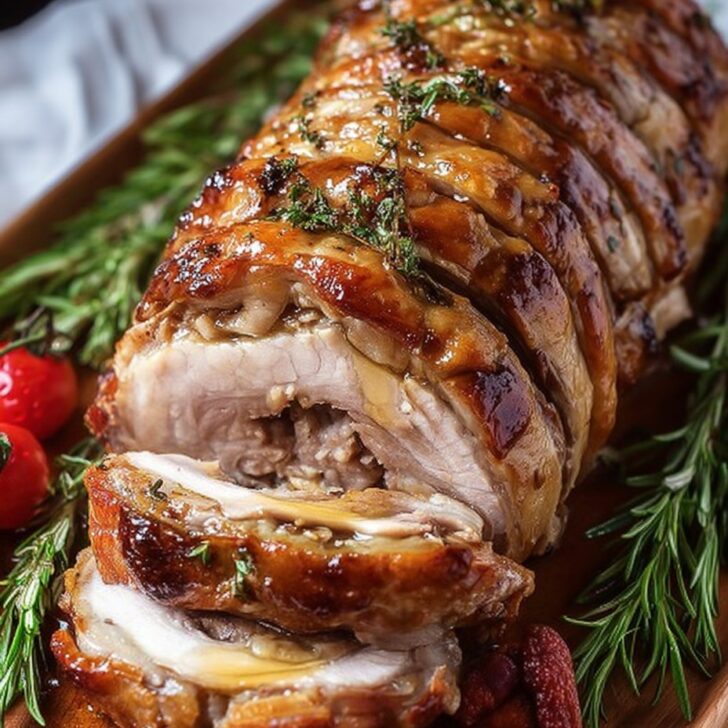
Let Me Tell You About My Stuffed Pork Roast Adventures
You ever get those days where you want something fancy but refuse to wear actual pants? Same. That’s exactly why I end up making this stuffed pork roast recipe, mostly on chilly Sundays. First time I tried this was after I totally botched a lasagna (long story, never try to ‘wing it’ with cottage cheese). So, I switched to pork, stuffed it with what was hanging around the fridge (sometimes a risky business), and boom—new family fave. My kids actually talk about this at school, which has led to a couple of awkward parent-teacher conference stories. Anyway, if you’re after something hearty that makes you look like you’ve got your act together—even if your kitchen says otherwise—let’s have a go.
Why You’ll Love This One—Honestly
I make this when I want everyone to ooh and ahh (or at least eat seconds, which basically means they’re impressed). My family goes crazy for this because it tastes like you put serious effort in, but in reality, the oven does most the heavy lifting. Also, it smells incredible—you probably don’t even need a candle. (Pro tip: don’t get overwhelmed if the stuffing looks kinda wonky; mine is rarely Instagram-pretty either.) And listen, I’ve undercooked it before. Now I’m mildly obsessed with meat thermometers.
What You’ll Need (But With Plenty of Wiggle Room)
- 1 boneless pork loin (around 3lb—give or take; honestly, whatever fits your roasting tin)
- 2 cups fresh spinach (sometimes I just use frozen, thawed—nobody noticed yet)
- 1 cup breadcrumbs (Panko is posh, but any crumb will do. Or toast smashed up with a rolling pin.)
- 3-4 garlic cloves, minced (or garlic powder if you’re feeling lazy, which I do often)
- ¾ cup grated parmesan (Grana Padano also works. My nan would insist on the real deal, but honestly…)
- ½ cup chopped sundried tomatoes (sometimes I leave this out if the kids are being picky)
- Handful of fresh herbs—parsley, sage, thyme, whatever’s still alive
- 2 tbsp olive oil (but I’ve used melted butter in a pinch)
- Salt and pepper (no story here, just add it)
- Butcher’s twine (or, once, I used unflavored dental floss. Worked surprisingly well.)
Let’s Make This Pork Roast! (Ready?)
- Preheat your oven to about 375°F (190°C). Sometimes I forget and have to wait—my bad.
- Make the stuffing: Toss the spinach (wilt it for 2-3 mins if it’s fresh), breadcrumbs, garlic, parmesan, sundried tomatoes, herbs, olive oil, and a pinch of salt and pepper in a bowl. Mix it up with your hands (or a big spoon if you’re fancy). This is where I usually sneak a nibble—quality control, you know.
- Butterfly your pork loin—which sounds trickier than it is. Just slice it open like a book (lengthwise, but not all the way through) and then open it up so it lays flat; if it looks like an old battered notebook, you nailed it.
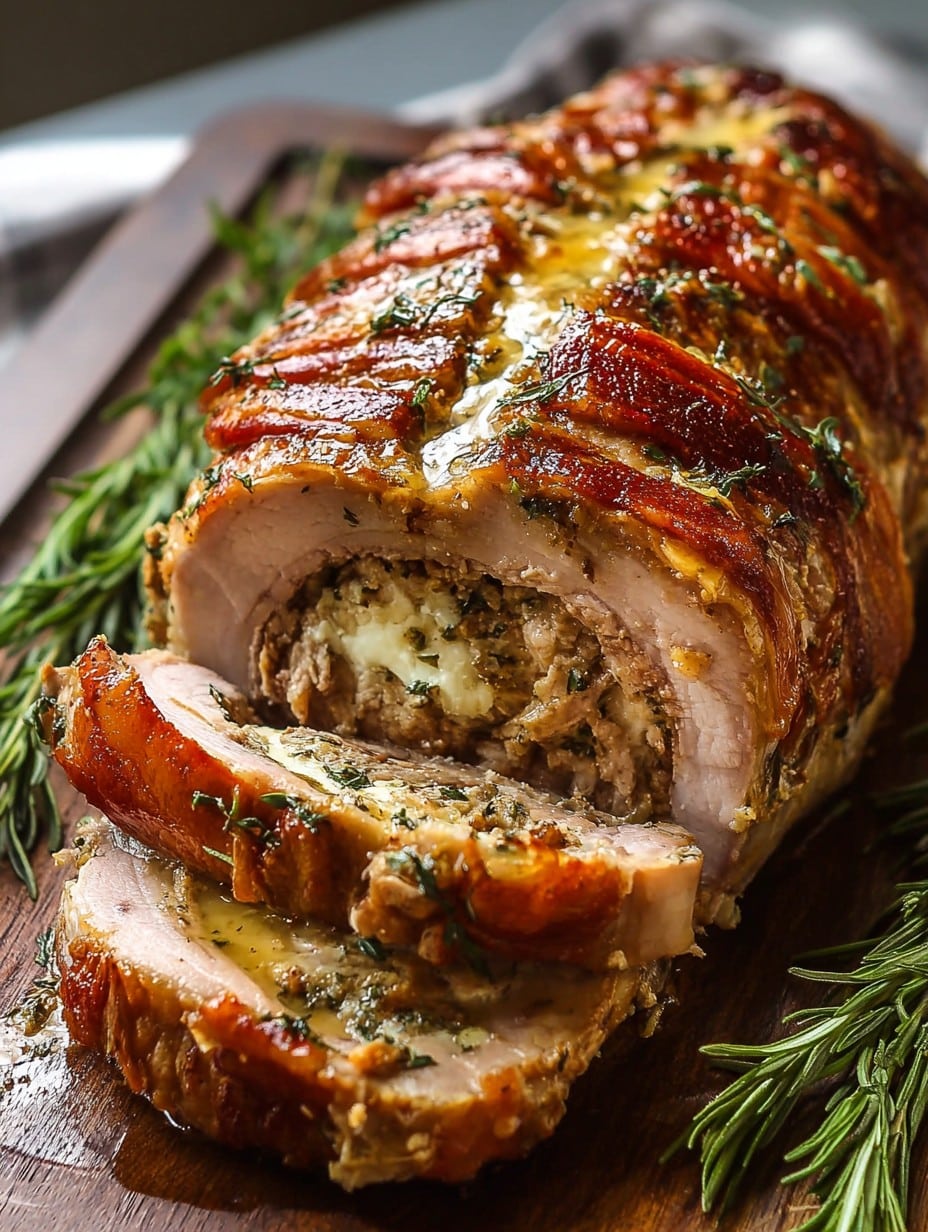
- Spread the stuffing over the pork—leave a little border at the edges so it doesn’t ooze everywhere while baking. Roll it up, pushing the filling back in now and then. All good if it looks a wee bit messy; it always does at this stage.
- Tie it up with twine (or dental floss, in a pinch). Just a few loops around should stop it flopping open.
- Season the outside; rub with olive oil and sprinkle on more salt and pepper.
- Roast for about 1 hour, or until the meat reaches 145°F in the thickest bit. Sometimes it takes a bit longer depending on whether I remembered to preheat properly. Let it rest 10-15 min so it stays juicy (every time I’ve skipped this my roast tried to escape its stuffing, so trust me).
- Slice—kind of thick, kind of thin, whatever you like. Holler for everyone to get to the table before it’s gone.
Notes from My Moderate Experience
- I once tried stuffing with apples and cheese—turned out surprisingly good, though the cheese tried to make a run for it.
- Don’t panic if the roast wants to unroll. More twine. Or, worst case, bake it seam side down and pretend that’s how it’s supposed to look.
- Panko crumbs stay crunchy if you toast them first, but honestly, life is too short.
Other Ways I’ve (Sometimes Regrettably) Tried
- Mushrooms: Gave it some extra umami—kids called it “weird pizza”. Up to you.
- Cranberries: Nice at Christmas, but sort of a weird combo in July.
- Chili flakes: Do NOT overdo. Learned that one the hard way. Bit too much zing.
Equipment—But No Judgment if You Don’t Have It
- Roasting pan (baking sheet totally works; just watch for drips)
- Kitchen twine (as above, dental floss if you must; but make sure it’s unflavored unless you really like minty pork!)
- Meat thermometer—You can guess, but honestly, that’s how I ruined a roast last year
- Sharp knife (serrated does okay too in a pinch)
How to Store (Leftovers, as If That Ever Happens)
Wrap leftovers tight in foil or pop in a container in the fridge. It’s apparently fine for 2–3 days—but honestly, in my house it never lasts more than a day because someone always nabs a thick slice for a midnight snack. If you’re actually planning lunch for the next day, maybe hide a piece at the back behind the ancient pickles. Oh, and you can reheat gently in the oven if you don’t dig cold pork.
Stuff I Like to Serve With It
This is excellent with roasted potatoes or even a silly-big heap of garlic mashed potatoes (my cousin Tom once put it in a sandwich with a fried egg and now I can’t unsee it). Anything green goes well too, like simple sweet peas.
If I Could Remember One Thing, It’d Be…
- I once tried rushing the resting stage and, wow, got dry pork and stuffing everywhere. Resist temptation, friend—patience is kind of crucial.
- Check your twine; once I grabbed sewing thread by mistake. Not the same thing.
- Actually, I find it works better if you slice once it’s just warm—not piping hot. Holds together, less chaotic.
FAQ—You (or Someone) Might’ve Asked
- Can I make this ahead of time?
Sure, I prepped it the night before once—just keep it wrapped in the fridge, add a smidge more cooking time since it starts cold. - Do I have to use pork loin?
Not strictly. Pork tenderloin works too, but it’s smaller and cooks faster, so watch it like a hawk. Actually, check BBC Good Food for other cuts if you’re feeling adventurous. - Is the stuffing flexible?
Absolutely—whatever’s wilting in your veggie drawer can probably be stuffed in, though I don’t recommend raw potato (don’t ask). - What if I don’t have a meat thermometer?
Go by time and poke judgement, but maybe double check with a thin knife to make sure it’s not pink in the middle (though let’s be real, I bought one on Amazon and never looked back). - Freezer friendly?
Sorta. It’s OK (not amazing). Tastes better fresh, but I’ve reheated slices from frozen just fine, if slightly drier.
Oh, quick digression—if you’ve got a dog, they’ll probably stare at you the entire meal, so don’t let them guilt-trip you like mine does. And, well, if you try a weird combo that works, let me know. I’m always game for more stuffing ideas that stray from the straight and narrow.
Ingredients
- 1 (3-4 lb) boneless pork loin roast
- 2 cups fresh breadcrumbs
- 1/2 cup chopped fresh spinach
- 1/2 cup grated parmesan cheese
- 2 cloves garlic, minced
- 2 tablespoons chopped fresh rosemary
- 1 tablespoon olive oil
- 1 teaspoon salt
- 1/2 teaspoon black pepper
Instructions
-
1Preheat oven to 375°F (190°C). Lay the pork loin roast flat and carefully butterfly it if needed.
-
2In a bowl, combine breadcrumbs, spinach, parmesan cheese, garlic, rosemary, olive oil, salt, and pepper. Mix until well combined.
-
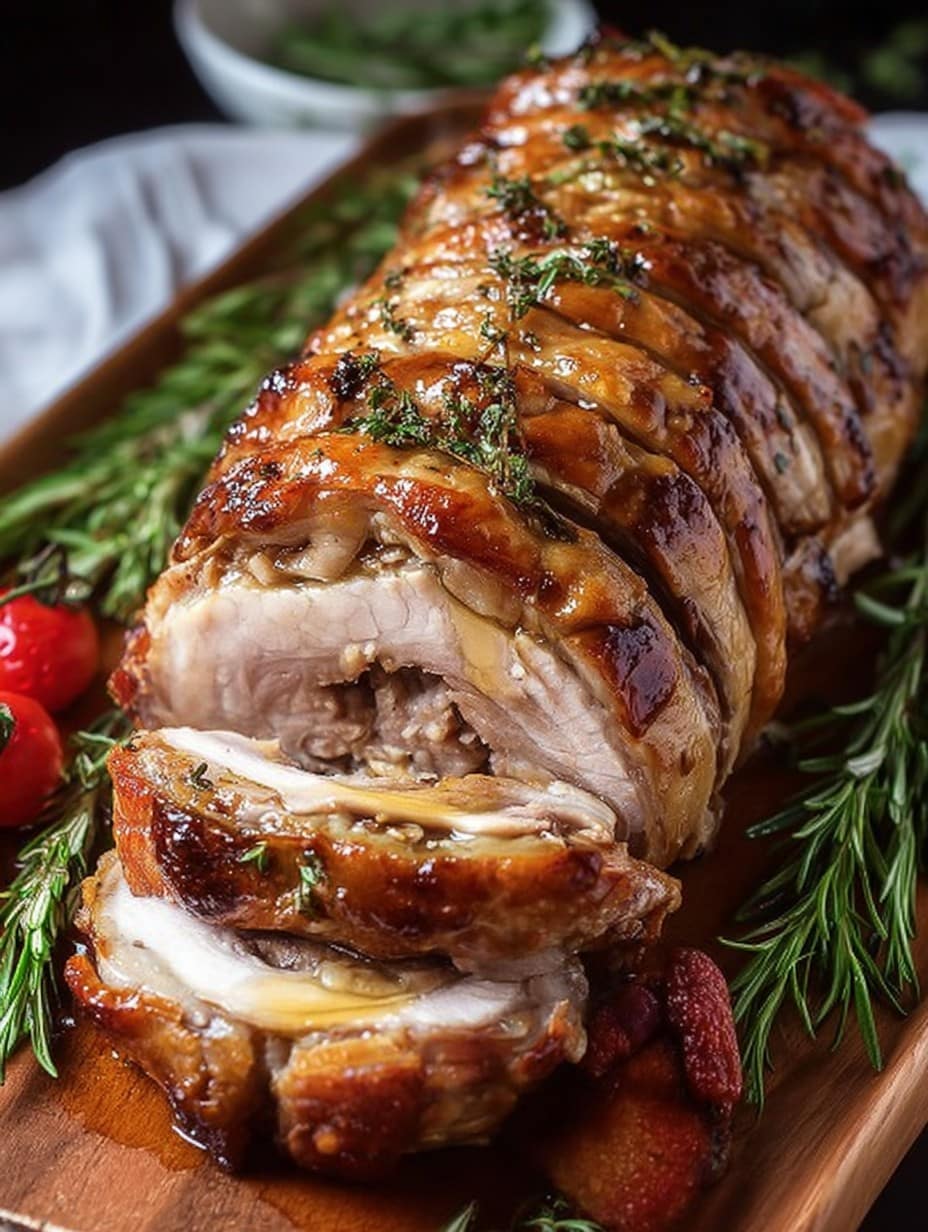
3Spread the stuffing mixture evenly over the butterflied pork loin. Roll up the pork and secure with kitchen twine.
-
4Place the stuffed pork roast seam side down in a roasting pan. Roast for 1 hour 30 minutes, or until the internal temperature reaches 145°F (63°C).
-
5Let the roast rest for 10 minutes before slicing. Serve warm and enjoy.
Approximate Information for One Serving
Nutrition Disclaimers
Number of total servings shown is approximate. Actual number of servings will depend on your preferred portion sizes.
Nutritional values shown are general guidelines and reflect information for 1 serving using the ingredients listed, not including any optional ingredients. Actual macros may vary slightly depending on specific brands and types of ingredients used.
To determine the weight of one serving, prepare the recipe as instructed. Weigh the finished recipe, then divide the weight of the finished recipe (not including the weight of the container the food is in) by the desired number of servings. Result will be the weight of one serving.
Did you make this recipe?
Please consider Pinning it!!